Newsletter / Research Activity Report / Satoshi Konishi
RARA Newsletter vol.15 As Showcased at Expo 2025 Osaka, Kansai: Micromachine Research to Open the Door to a “Future where the Physical and Cyber Worlds Intertwine”──Interview with Professor Satoshi Konishi
2025 / 05 / 26

2025 / 05 / 26
This edition of the newsletter features an interview with Professor Satoshi Konishi (RARA Fellow).
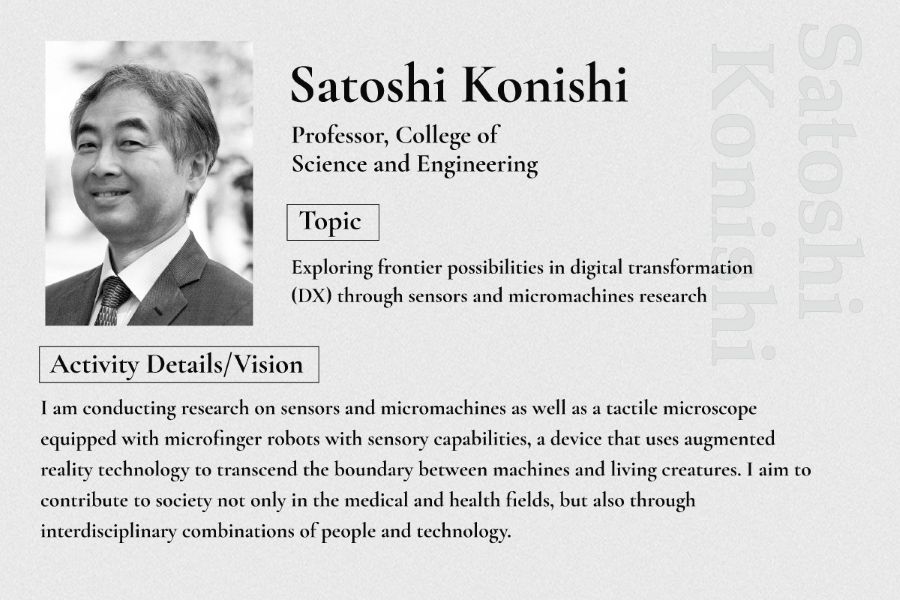
Prof. Konishi has pursued his research with a unique approach, exploring topics such as the “tactile microscope,” which is enabled by microhands with sensory capabilities, and “cellular cyborgs” (cyborgs using cells, which are pronounced “saibou” in Japanese), in which cultured cellular tissues are integrated with sensors and micromachines. Applications for these bold endeavors are expected to extend beyond engineering into a diverse array of fields such as medicine and the life sciences, and they are attracting significant interest both domestically and internationally.
Prof. Konishi exhibited his latest research findings at Expo 2025 Osaka, Kansai, which opened in April, attracting considerable attention from visitors. This served as an opportunity to showcase the subsequent development of the findings he presented at Expo 2005 Aichi, focusing on the achievements of the Ritsumeikan Global Innovation Research Organization (R-GIRO) project that Prof. Konishi leads.
Prof. Konishi has been involved in RARA since the conceptual phase prior to its establishment in June 2021, and he has served as a RARA Fellow since the Academy’s inception. While using the Expo exhibit and other opportunities to disseminate a wide range of findings running the gamut from micromachine research to applications in the fields of medicine and the life sciences, he has been deeply involved in designing RARA’s institutional framework and also focuses on education and the cultivation of researchers. We sat down with Prof. Konishi to discuss his work.
(The following is a summary of the conversation with Prof. Konishi compiled by our writer.)
Presenting the future images at Expo 2025 Osaka, Kansai: Continuing a tradition of exhibiting at Expos since 2005
My colleagues and I have been allowed to present our research to the public at the International Red Cross and Red Crescent Movement Pavilion at Expo 2025 Osaka, Kansai. (The Expo exhibit ran from May 4-10.)
Under the theme of “Designing Future Medical Care (Hospitals) Empowered by Sensors and Micromachines and a Data-Driven Society,” we demonstrated technologies such as micromachine-based palpation using the tactile microscope, as well as an artificial intestinal tract that combines cultured cells with micromachines—an embodiment of the “cellular cyborg” concept. Casting an eye on the future of medical care in which personal data derived from medical diagnostics and drug efficacy analyses using these kinds of cutting-edge technologies will be leveraged, these demonstrations afforded visitors an opportunity to contemplate the nature and desired state of a society that utilizes advanced technology and data.
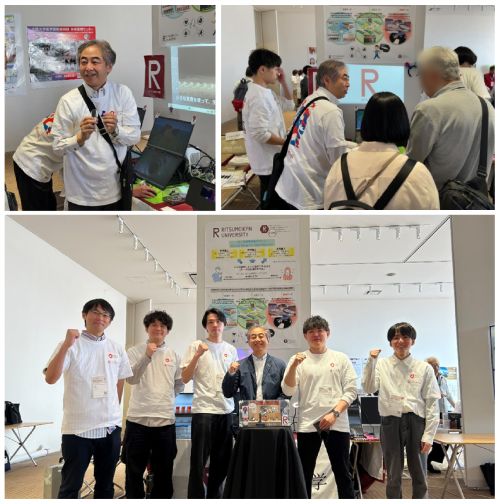
Having previously exhibited at Expo 2005 Aichi, it was exciting to get another chance to present my work 20 years later.
An Expo is not only a place to share research findings with the general public; it is also a place to probe the future. Since future technologies are not yet widespread, many people may not yet recognize the need for them. These are also called unmet needs.
Using the microfinger robot I exhibited in 2005, I demonstrated potential future beauty treatments, such as applying perms to individual eyelashes. After the Expo, I launched new projects with partners who had actually witnessed the intricate movements of these microfingers. Projects we pursued included advanced medical research such as in vivo palpation and cell transplantation and research to evaluate drug efficacy using artificial intestinal tract incorporating artificial muscles.
Our Expo exhibition this time focused on medical diagnosis and analysis. In addition to showcasing microfinger palpation using the tactile microscope and a computer-controlled artificial intestinal tract—an example of the “cellular cyborg” concept—we also exhibited an analytical device that makes active use of microscopic droplets. While pipettes and test tubes are typically used in life science experiments, we proposed to replace them entirely with droplets. By arranging numerous droplets in parallel, it would be possible to conduct a number of reaction experiments simultaneously and observe them in real time. The world in which these “working droplets” operate is also one where we are uncovering unmet needs.
This time, with an eye toward the social implementation of sensors and micromachines in the medical and health fields, which is a key research theme at RARA, we are also exploring social design for future medical care in the era of “Society 5.0,” which is said to be the future society that Japan should be aiming for and is also one of the project themes of R-GIRO. How should we handle and how do we want the various personal data obtained through cutting-edge diagnostic and analytical technologies to be handled in cyberspace? I believe that research into advanced technologies aligned with this “ideal state” is becoming increasingly important.
Micromachines, cells, and people
In 1996, shortly after earning my degree in my twenties, I found myself heading my own research laboratory at Ritsumeikan University. At the time, Ritsumeikan University, which had just opened its new campus at BKC, was making headlines with numerous initiatives that transcended its traditional boundaries, including the activities of its Industry-Academia Collaboration Office (Liaison Office). While it was my own choice to pursue the frontiers of research, establishing a lab and managing the budget proved as challenging as I had imagined. I believe the research topics born in this frontier environment were quite innovative. I secured patents and implemented multiple national projects by way of industry-academia collaboration.
Among them, I believe that the technology for printing microdevices with an inkjet printer and the technology for controlling acoustic properties using walls embedded with micromachines are still relevant. While these share similarities with the 3D printers and noise-canceling technology that everyone uses today, they may have been a bit too ahead of their time in the 1990s. Even so, “cellular cyborgs” and the tactile microscope,” both of which trace their roots back to the same period, are topics that I have been researching for nearly thirty years, right up to the present day.
The vague outline of the “cellular cyborg” concept first came to me during my undergraduate years, and it grew more concrete when I entered graduate school and encountered micromachine research. It has only been over the last twenty years or so that I have finally been able to do the kind of work that I had originally envisioned. Time truly flies.
As for the tactile microscope, that line of research began with work on artificial muscles to move microfingers. This is because I was fascinated by things moving under the microscope. Even with the first digital microscope I ever bought, I spent hours observing the movements of ants and pill bugs.
Eventually, I began equipping the microfingers driven by artificial muscle with sensors, because sensing is essential for controlling the movement of the fingers. I wanted to use my own senses to connect with microscopic objects so small they could not be touched by human hands. If the microfingers could be equipped with sensation, then I could create a tactile microscope. This was the line of thought that naturally occurred to me.
Using the sensors and micromachines technology we are developing, in which we incorporate sensors into micromachines, we can not only detect physical phenomena but also explore artificial mechanisms capable of replacing or extending human sensory organs, based on the recognition that this can serve as an interface connecting physical and cyber spaces. In particular, the development of technology aimed at perception beyond the five senses holds potential for future applications in medical care, and even in the fields of education and entertainment.
In this way, I am working to extend my domain beyond the framework of my own specialization, micromachines and engineering, into data science, which deals with target signals and information, and into the field of applied life sciences. This makes me realize once again that my activities are only made possible by my research colleagues who hail from a wide range of disciplines.
Achieving the world’s first successful measurement of the force of a pill bug
In 2022, we achieved a world first by measuring the leg force and body force of a pill bug using microfingers just a few millimeters long equipped with our proprietary tactile sensors. This garnered attention as the realization of the tactile microscope concept.
By manipulating the microfingers to touch the pill bugs, we measured their leg force and body force at the mN level as they reacted. The microfingers we developed measure 12mm in length, 3mm in width, and 490μm in thickness. They move via pressure-driven soft artificial muscles made of silicone rubber and incorporate flexible strain sensors that employ liquid metal. Furthermore, the operator connects to the microfingers through a control interface worn on their own hand, enabling them to sense the measured force and temperature. Our goal is for this device to become an augmented reality tool for the micro world.
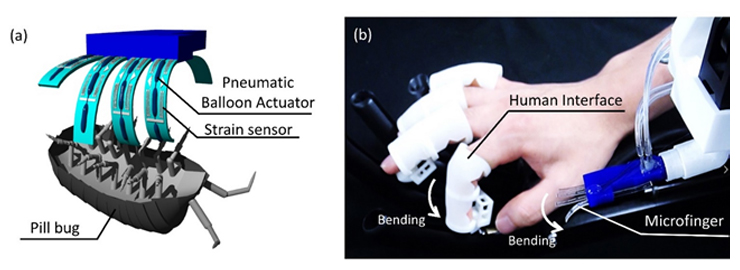
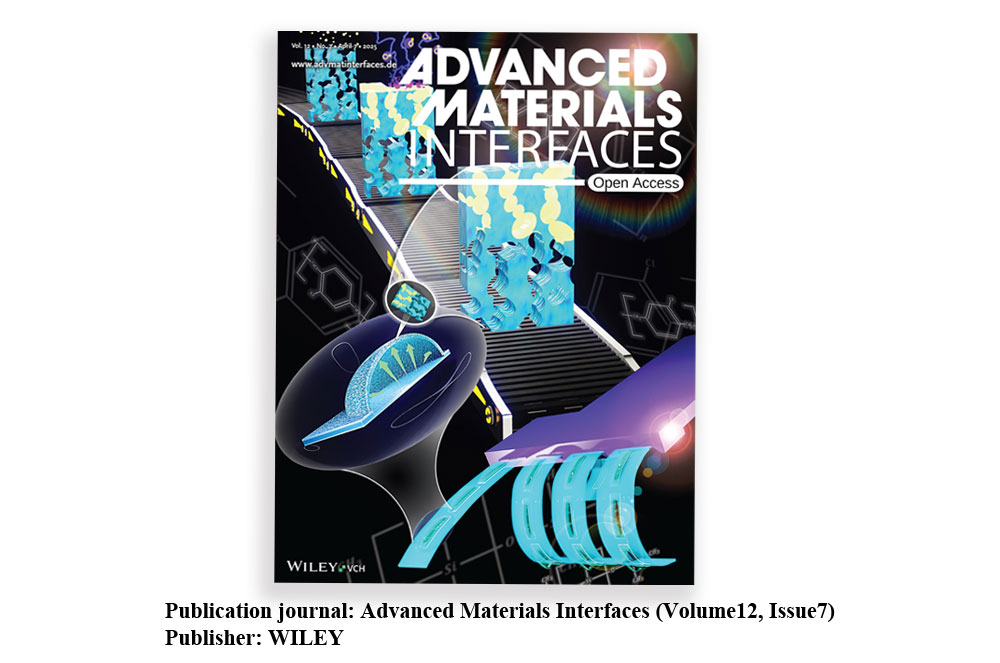
Image of a microhand used on the back cover of an international journal
Recently, as part of our laboratory’s research to enhance the performance of pressure-driven soft devices, our findings on parylene coating technology, which enables both sealing and elasticity in silicone rubber (PDMS) used as a structural material, were published in the international academic journal Advanced Materials Interfaces on January 23, 2025. This represents a significant basic research achievement that will support the functionality of microfingers.
What’s more, the findings presented in this paper were featured on the back cover of the journal, and they are generating renewed interest among scholars. I was particularly delighted because our students made significant contributions to the creation of this cover. Through collaborative brainstorming, we exchanged ideas on how we could create the cover image, and we finalized a layout where the microhand materials appear to evolve as they move down a conveyor belt.
The ideas born from bridging different fields truly excite me. For example, “cellular cyborgs” enable the integration of sensors and micromachines into cultured cell tissues, allowing them to connect to computers and build a world where the real physical space and digital space can be connected.
In our laboratory, we are researching various cell manipulation techniques, such as giving biochemical commands like “store” or “consume” to fat cells, monitoring their behavior, and enabling automatic computer control, or applying electrical stimulation to skeletal muscle to control its hypertrophy. We anticipate that the cyberization of cellular tissues will be able to contribute to various new developments in the life sciences.

Members of the laboratory at a kayak tour on the lake BIWA.
The meaning of sharing research with the public
Fifteen years ago, I had the opportunity to appear on television programs, which reaffirmed the importance of sharing research with the public. What struck me was how much interest there was not in the technical details, but in the question of why I am pursuing this research.
Furthermore, in 2024, I was able to publish a book titled The Fundamental Background of Sensors and Micromachines (Corona Publishing) as its editor. This book systematically compiles interdisciplinary content on the topics of sensors and micromachines. I am grateful to RARA’s support which allowed me to publish this textbook.
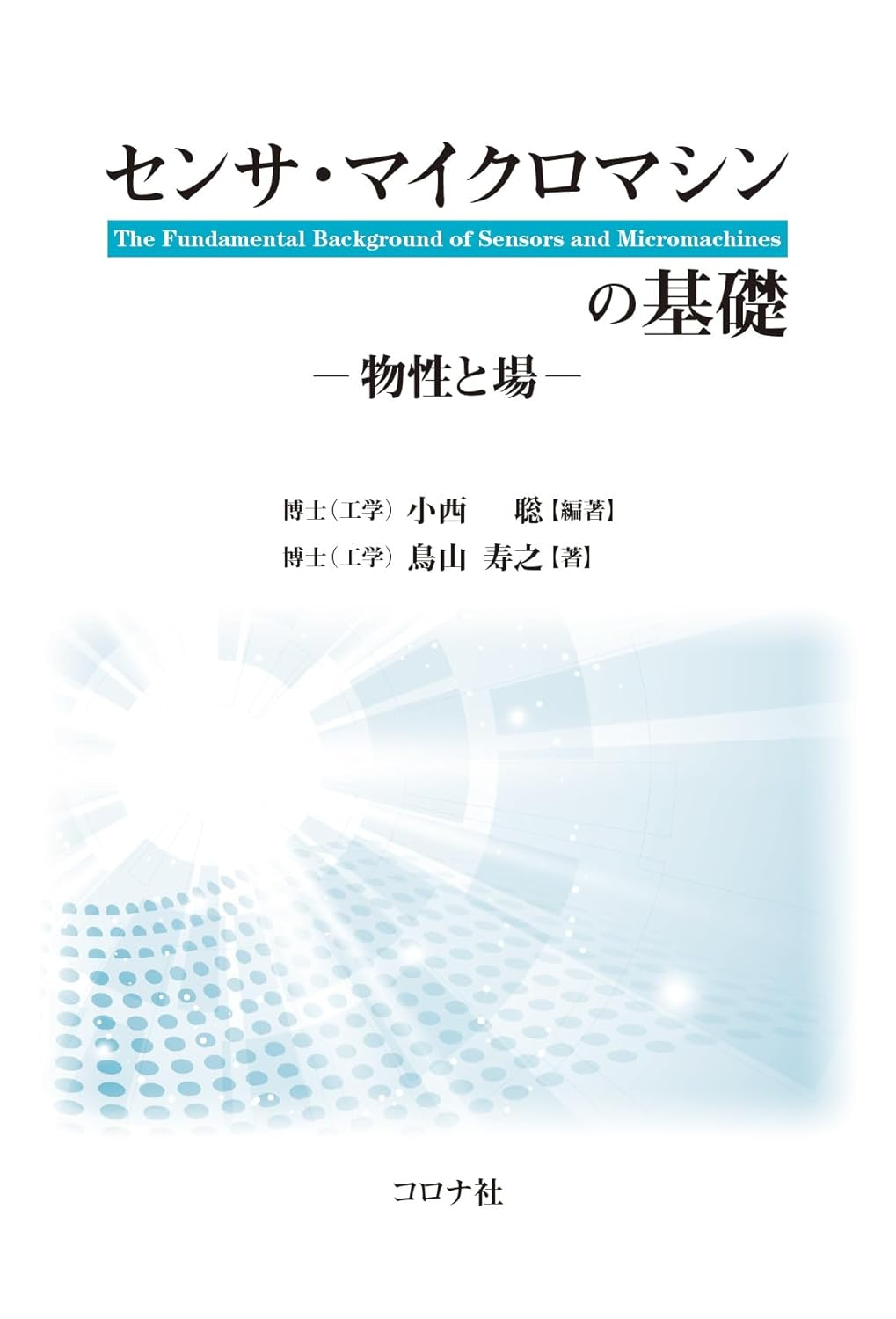
This book provides an in-depth explanation of how sensors and micromachines serve as devices that convert information between the physical and cyber spaces, and how their functionality is realized through the full utilization of material properties and field effects.
Possibilities opened up by interdisciplinary and cross-cultural connections and insights: The significance of RARA’s founding
In fact, not all of our research began with clear needs identified by society or industry. Rather, cross-disciplinary collaboration, where new topics and technologies emerge, often produces things that no one has yet recognized as a need, and I believe that is where truly transformative value lies. As research progresses, we encounter people who recognize that value, and new collaborations begin to form. Attracted by the excitement of these network-based moments of insight, I have proactively pursued exchanges across different fields and cultures while continuing my research.
As for RARA, I place great expectations on its role as a mechanism and a place where individuals can thrive as members of networks comprised of groups of various individuals. When considering how to shape Ritsumeikan as a next-generation research-intensive university, researchers from diverse backgrounds came together, shared ideas, and engaged in discussions in which we did not shy away from disagreeing with each other. Out of that process emerged a “system for scholarly pursuit and advancement,” and I believe RARA is the crystallization of that effort. I was also involved in the design of RARA from the initial conceptual stage. Although I have taken a step back from the management of RARA, as a Fellow, I remain involved as a player on the research team.
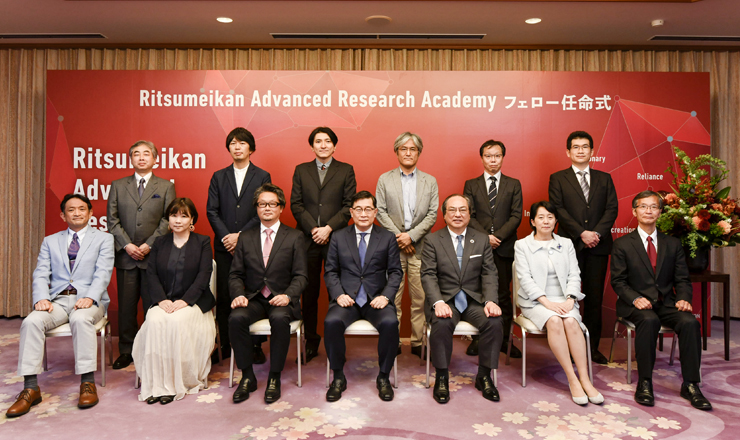
Selection of RARA Fellows is based on an open application process that includes an interview. During the selection process, applicants express the aspirations they want to achieve as Fellows. I believe that the responsibility for fulfilling those aspirations, coupled with the discretion granted to us as Fellows, makes it all the more important to consider how we make use of that opportunity.
In the context of both teaching and research, the RARA Fellow Program has a unique partnership faculty program to strengthen the research that will drive the next-generation research-intensive concept. By teaming up with next-generation researchers, this system allows individual Fellows to refine themselves as researchers. I am also taking advantage of this program to explore new possibilities as a researcher myself. I think that the way in which this system, which was born from the serious discussions I just mentioned, is utilized will also determine the value of the system itself.
Fostering a proactive attitude to create breakthroughs: RARA’s focus on student development
When engaging with students, instead of a confrontational faculty-student relationship, I aim to create a relationship where we work toward the same goal. Faculty and students may find themselves on different career trajectories now, but they share the same goals. If they can both focus on a common goal, then a proactive attitude will naturally be nurtured. I believe it is extremely important to create the motivation needed to achieve that goal, so I interview students multiple times before finalizing their research topics. In the end, we decide on the topic together while carefully discerning where the students’ interests lie and their awareness of the issues at hand. I believe this process is what builds a shared sense of conviction, motivation, and a committed attitude toward the goal.
Several of the research findings born from these kinds of relationships are what led to my participation in the Expo. The exhibits, which keep an eye on social implementation, detail the findings I have been able to refine in collaboration with students in my laboratory. Students were proactively involved in shaping the specific works for the exhibit and planning how to explain them at the Expo venue. This is not something we could have achieved overnight.
At the foundation of the Expo exhibit lies the question, “What kind of society do we want to realize?” Designing technological development with a conscious awareness of our “ideal society,”—a stance that blends the humanities and sciences, resonates with the values we discussed during the establishment processes of RARA.
In a university, which is a complex organization, thinking about how we grow toward the future requires attention not only to systems and structures, but also to the relationships and motivations of the people who support them. When we were envisioning RARA, I increasingly felt the importance of a role akin to the libero in soccer—someone who moves freely, connects researchers, and helps the entire team reach its goals. I played soccer when I was a student, so this sense of positioning is something that has always stayed with me. In the context of Ritsumeikan, the question becomes: how do we cultivate the soil in which researchers who seek to further refine themselves can truly grow as researchers? I believe that designing such an environment is directly tied to the sustainability of the university as a whole as we aim to become a next-generation research-intensive university.
The power of visualization for the development of talent and society at large: RARA’s ongoing evolution
I believe that the development of doctoral degree holders is one of the pillars of RARA’s mission. I am currently working with doctoral students on domestic and international conference presentations and joint research projects. To enhance the appeal of our doctoral degree programs, we need more visible role models. As part of this effort, RARA is also working to expand its Student Fellow Program.
Visualization increases the transparency and credibility of the research environment. By being able to see what researchers like RARA Fellows believe in and what they are doing, students can more easily envision their own futures, and the public can gauge the seriousness of the university. I firmly believe that these visualization efforts will become the trust capital of the university.
How RARA will evolve going forward will likely depend on how the players, that is, the Fellows, make the most of it. Strengthening RARA through the lenses of organizational management and human resources strategy will be the key to ensuring its further progress. I will do my utmost for Ritsumeikan evolution into a world-class research-intensive university by coordinating education and research, the individual and the organization, and freedom and responsibility.
RELATED NEWS
-
Satoshi Konishi
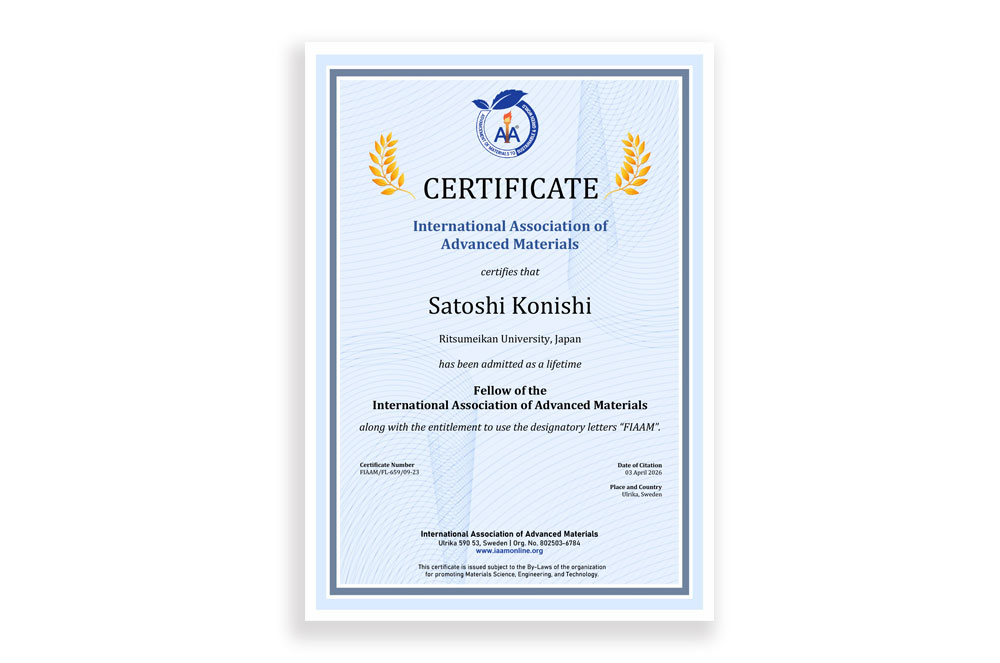
Professor Satoshi Konishi awarded the title of Lifetime Fellow of the International Association of Advanced Materials (IAAM)
2026 / 04 / 30
VIEW DETAIL
-
Satoshi Tanaka
Professor Satoshi Tanaka appointed Director of the Art Research Center at Ritsumeikan University
2026 / 04 / 01
VIEW DETAIL
-

Kota Suechika
Professor Kota Suechika’s research findings on “Area Studies 2.0” published in Third World Quarterly
2026 / 03 / 18
VIEW DETAIL